

Disaster Recovery Resources
BEFORE,
DURING
& AFTER
We are committed to helping Baldwin County residents prepare for storms, stay informed during severe weather, and properly manage debris after a storm passes. Use the resources below to understand what to expect before, during, and after major weather events and how you can help support safe, efficient recovery for our communities.
BEFORE
THE STORM
Prepare Early to Reduce Risk and Debris
Preparation should begin well before hurricane season. Taking proactive steps helps reduce the amount of debris created during a storm and makes cleanup safer and more efficient.
Ongoing Yard Maintenance
ONGOING YARD MAINTENANCE
Trim weak or overhanging branches near structures.
Thin vegetation to allow wind to pass through more easily.
Regularly remove loose yard debris.
SEASONAL PREPARATIONS
SEASONAL PREPARATIONS
Complete major tree trimming or removal before June 1.
Avoid large-scale yard work during hurricane season (June-November).
If hiring a contractor, include debris removal in your service agreement.
Contractor-generated debris must be taken to an approved disposal facility and may require a fee.
WHEN A STORM IS APPROACHING
Pause Activity and Stay Safe
Once a storm has been named or a watch or warning is issued, we ask that you stop all non-essential yard work and debris placement. This helps us maintain safe and efficient operations as we prepare for potential impacts.
Facility & Service Impacts
Our transfer stations and landfills may close early to prepare for the storm.
We may pause collection services to ensure the safety of our teams and residents.
We encourage all residents to follow local emergency guidance and prioritize personal safety.
What Not to Do
WHAT NOT TO DO
Do not cut trees or perform major yard work once a watch or warning is in place.
Do not begin construction or demolition projects.
Do not place debris at the curb.
When large amounts of debris are placed out before a storm, it creates safety hazards and can overwhelm our collection systems before landfall.
AFTER THE STORM
Be Patient and Follow Proper Debris Guidelines
After a storm passes, we begin coordinated recovery efforts across Baldwin County. Restoration takes time, and your cooperation helps us complete the cleanup process safely and efficiently.
Our first priority is restoring regular household garbage collection.
- Bag and secure all household waste
- Place garbage at the curb on your normal collection day
Debris Separation
To help us collect debris efficiently, we ask that you separate materials into distinct piles:
– White goods & bulky pick-ups
– Vegetative debris (trees, limbs, yard waste)
– Construction and demolition debris
Do not mix materials, as this will delay collection.
Proper Placement
Place debris neatly at the curb.
Do not block roads, sidewalks, or drainage areas.
Keep debris away from mailboxes, power lines, utility equipment, fire hydrants, and water meters.
What to Expect
We will begin debris collection after completing initial damage assessments.
Vegetative debris is typically collected first.
Construction debris is collected in later passes.
Full recovery may take several weeks depending on storm severity.
STORM RESPONSE PROCESS
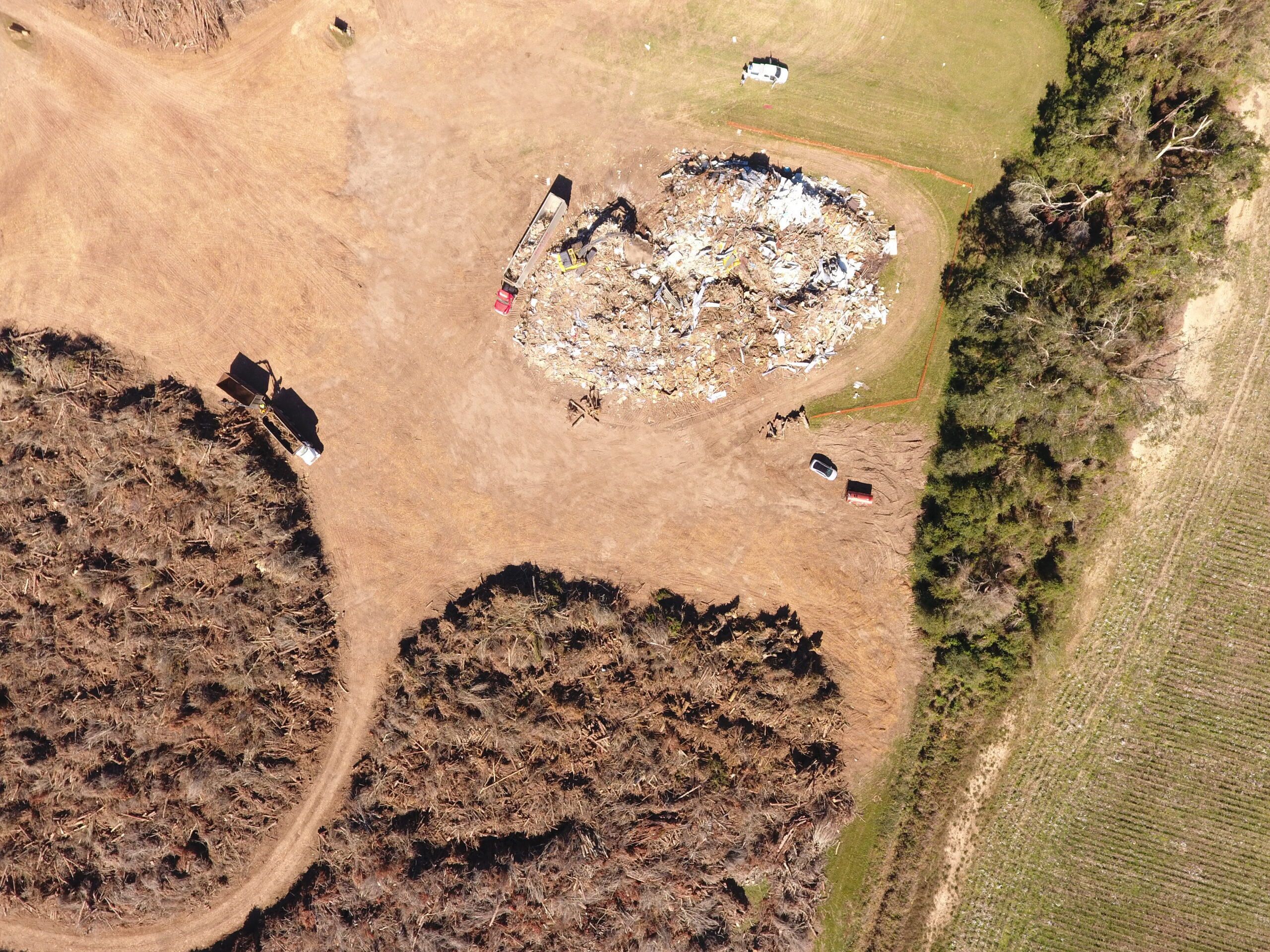
After a major storm, we follow a structured response plan to restore services and remove debris as efficiently as possible across Baldwin County.
Typical Recovery Timeline
Damage Assessment: 2–3 days
Debris Site Setup: 3–4 days
Equipment Deployment: 4–5 days
Debris Collection: Several weeks to months, depending on conditions
We carefully plan collection routes to serve the entire county. Requests for individual pickups outside of these routes may delay the overall recovery process.
We will share updates on debris collection and recovery progress as they become available