
MATERIALS RECOVERY
FACILITY (MRF)

The Materials Recovery Facility (MRF) is where recyclable materials are sorted, processed, and prepared to be transformed into new products.

The MRF is designed to process up to 40,000 tons of recyclables annually; separating plastics, paper, metals, and cardboard into clean material streams that are baled and sold to recycling end markets. By separating recyclables into usable streams, the MRF helps ensure that the items you place in your bin can be successfully reused and repurposed, reducing landfill waste and supporting a more sustainable local economy.

THE GREEN MACHINE PROCESS, STEP-BY-STEP
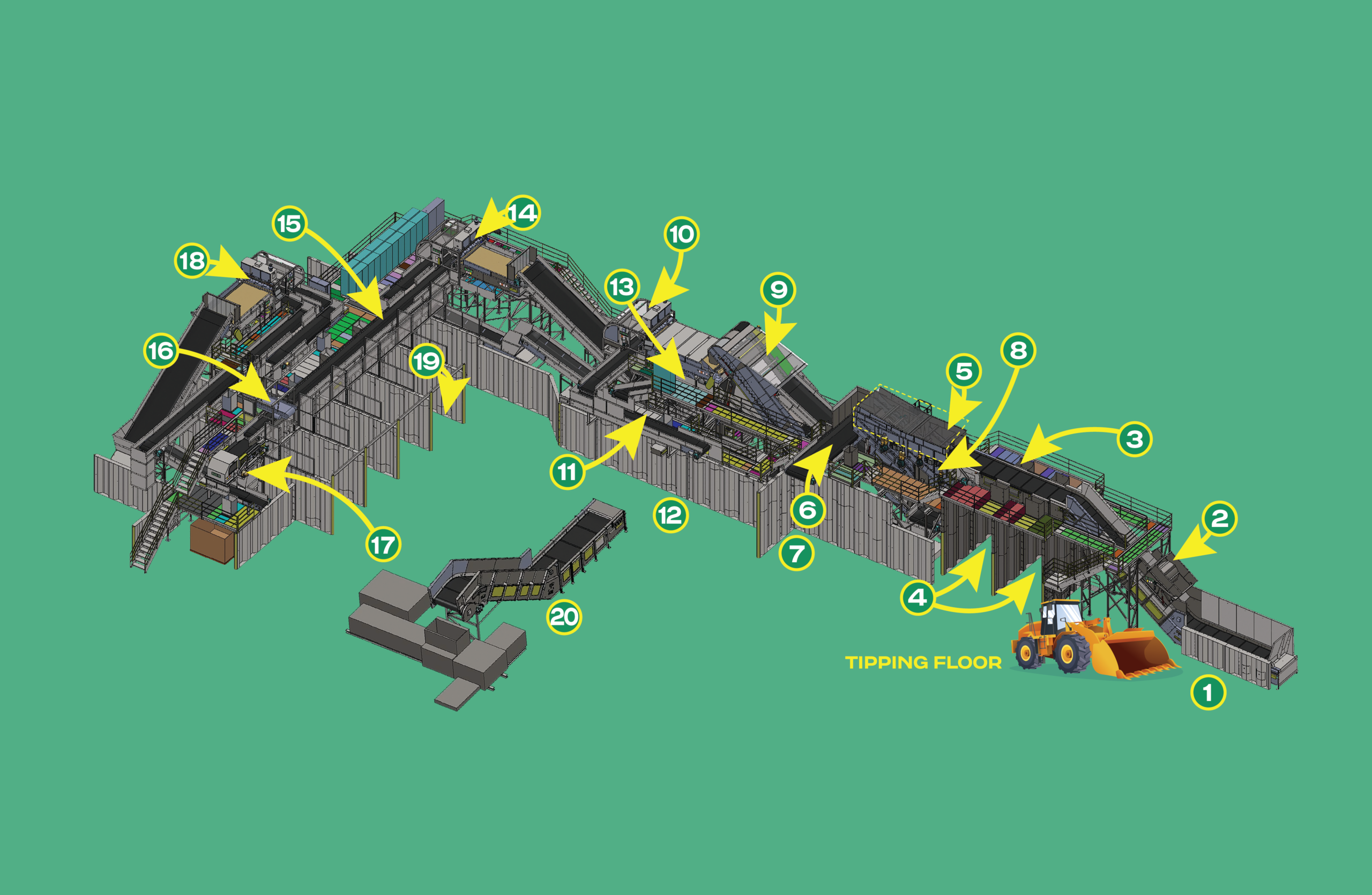
MRF Chart explaining how material moves through the Green Machine for recycling
  1. Loader operator scoops up material from the tipping floor and feeds it onto the lower conveyor.
  2. Material rides up the conveyor where it hits a spinning metering drum that evens everything out.
  1. It then continues on the conveyor to the presort area where people remove contaminants (trash, bulky plastics, film and metals) that could damage the downstream equipment.
  2. The contaminants are thrown into dedicated bunkers below to remove them from the recycling stream.
  3. All the recyclable material continues on to the double-deck OCC (Old Corrugated Cardboard) screen where bulky cardboard is pushed off the top and smaller items such as containers, smaller paper, glass, and cans fall through the screen.
  1. The cardboard continues up and over to the cardboard post-sort where more hand sorters can pull out contaminants, such as plastic film or rigid plastics, that might have bounced over the screen.
  2. Once cardboard drops into the bunker, a loader picks it up and feeds it into the baler.
  1. What falls through the first section of the OCC screen lands on a glass breaker screen where the glass is crushed and then conveyed out of the system to its own bunker where it can be handled separately.
  1. The remaining material that passes over the glass breaker screen makes its way to the first polisher screen that pulls the paper over the screen and allows the containers to roll back and fall through the screen.
  2. The paper that rolls over the top of the first polisher screen hits the first optical sorter which is trained to pick contaminants out of the paper.
  3. The paper lands on a post-sort belt where any remaining contaminants are pulled out.
  4. After the post-sorting process, the paper drops onto the floor where it is scooped up by a loader and fed to the baler.
  5. The containers that roll back and through the polishing screen then move through a second polisher screen that pulls out any remaining paper and mixes it in with the other paper material.
  1. After paper is removed the containers move forward to the second optical sorter, where all PET (#1) plastics are picked out. Here, people can also hand-sort out any contaminants that are not PET, throwing it back on the line for further processing.
  2. The remaining containers end up on the container post-sort where HDPE natural and colored (#2) plastics are picked out by hand, and the remaining containers go downstream for further processing.
  1. Tin is separated by a cross-belt magnetic separator.
  2. Aluminum is separated by an eddy current separator. Here, hand-sorters remove contaminants like low-grade aluminum, such as tin foil and cat food cans.
  1. At the end of the line, all remaining containers go to a third optical sorter where polypropylene (#5) and aseptic cartons are sorted out, and then the cartons are separated from the #5s by hand.
  1. Each type of container drops into its own storage bunker where they are individually scooped up and fed to the baler.
  1. The final step in the recycling process is to compress the separated materials into high-density bales with the baler. The baled products are then sold to manufacturers where further processing occurs in order for the material to become new products.
ACCEPTED MATERIALS
Plastic Types
# Type Full Name Common Products Recycled Into
PET plastic icon 1 PET Polyethylene Terephthalate Soda & water bottles, cups, jars, clamshells Clothing, carpet, clamshells, soda & water bottles
HDPE plastic icon 2 HDPE High-Density Polyethylene Milk jugs, detergent & shampoo bottles Detergent bottles, flower pots, crates, pipe, decking
PVC plastic icon 3 PVC Polyvinyl Chloride Cleaning supply jugs, automotive product bottles Pipe, wall siding, binders, carpet backing, flooring
LDPE plastic icon 4 LDPE Low-Density Polyethylene Squeeze bottles Trash bags, plastic lumber, furniture, shipping envelopes, compost bins
PP plastic icon 5 PP Polypropylene Yogurt tubs, cups, juice bottles Paint cans, auto parts, food containers, hangers, plant pots
PS plastic icon 6 PS Polystyrene To-go containers, CD cases Picture frames, molding, rulers, flower pots, toys
Other plastics icon 7 OTHER Other Plastics Bottles, safety glasses, CDs Electronic housings, auto parts
Material Common Products Recycled Into
Aluminum Soda cans, beverage cans, food tins, and other aluminum containers. New aluminum cans, car parts, construction materials
Steel (Tin Cans) Soup cans, vegetable cans, pet food cans, and other steel food containers. New steel cans, appliances, car parts, construction materials
Paper Newspapers, magazines, office paper, junk mail, paperboard (such as cereal and cracker boxes), and flattened cardboard boxes. New paper products, tissue paper, notebooks, cardboard, packaging materials
Cardboard Newspapers, magazines, office paper, junk mail, paperboard (such as cereal and cracker boxes), and flattened cardboard boxes. New cardboard, paperboard, packaging materials, paper products

RECYCLING PREPARATION GUIDELINES

We do not accept Styrofoam items for recycling. Please make sure all recyclable items are empty and rinsed before placing them in your cart, labels and caps may remain on containers, and cardboard boxes should be flattened to help save space and improve collection efficiency.

WASTE & RECYCLING ADVENTURE CENTER

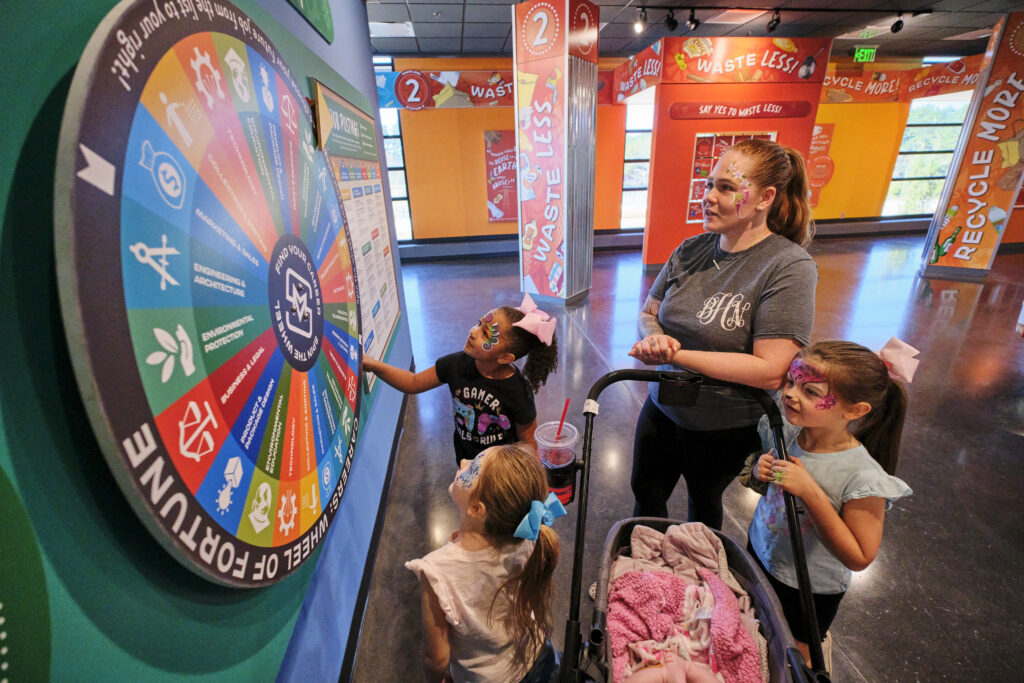
Located at the MRF, our Waste and Recycling Adventure Center offers hands-on educational experiences where visitors can explore how recycling works, learn about responsible waste management, and see firsthand how their everyday actions make a difference.The center serves as a valuable resource for environmental education in Baldwin County, welcoming students, organizations and community groups.

Waste & Recycling Adventure Center
Recycling at a CHaRM

CHaRM FACILITY AT MRF

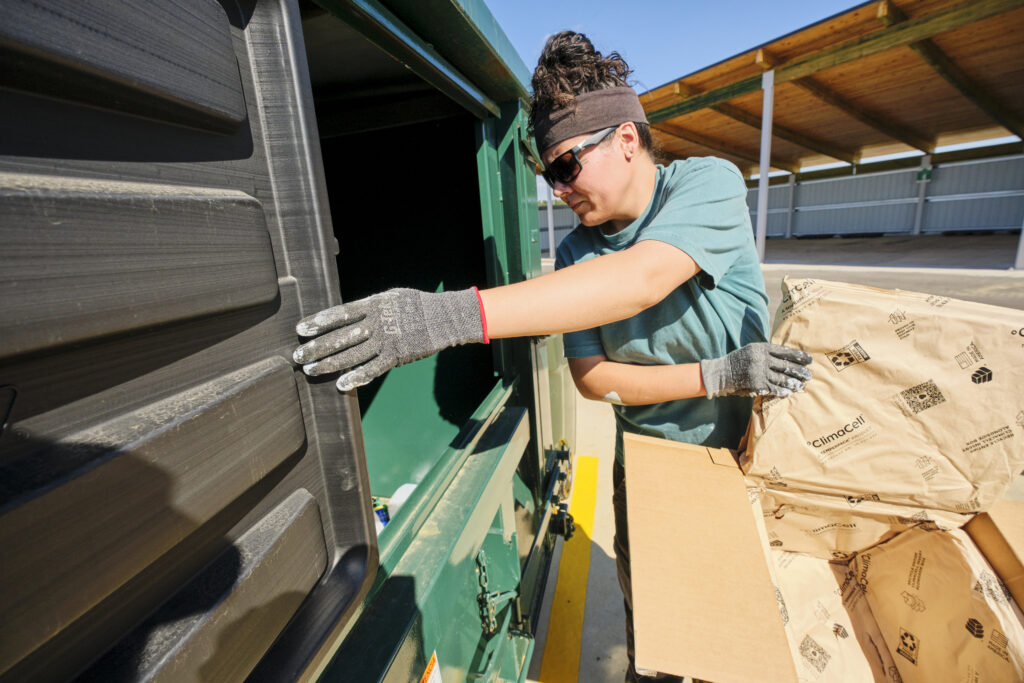
The Magnolia CHaRM, located directly behind the MRF, is a convenient drop‑off site for items that cannot go in your curbside recycling bin. This includes things like electronics, batteries, paint, propane tanks, lightbulbs, and household hazardous waste, materials that require special handling to ensure they are managed safely and responsibly.

The CHaRM is also another easy way to recycle everyday materials such as fibers, plastics, and aluminum or tin cans. Whether you have hard‑to‑recycle items or common household recyclables, the CHaRM provides a safe and reliable option to keep more materials out of the landfill.

Most items are accepted free of charge, with small handling fees applying to select materials.

THE ART OF RECYCLING

A Visual Journey of Sustainability

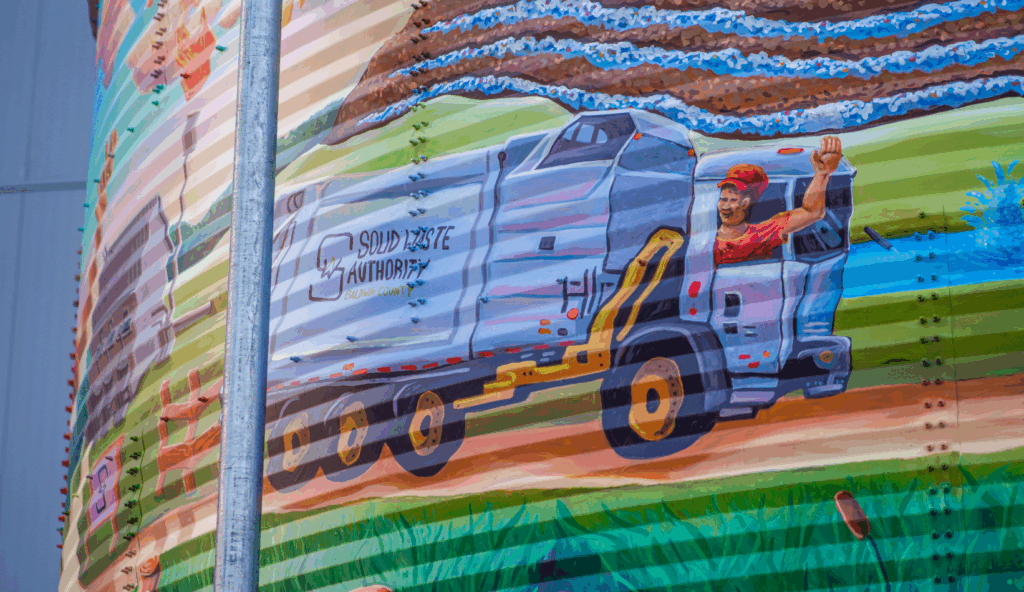
Painted on our water tank at the MRF by artist Banks Compton, our vibrant mural illustrates the journey of materials from home to landfill, through processing, and back into the community, demonstrating that every resident plays a role in protecting our environment and building a more sustainable future.

Mural on side of MRF
WASTE & RECYCLING EDUCATION TRAILER
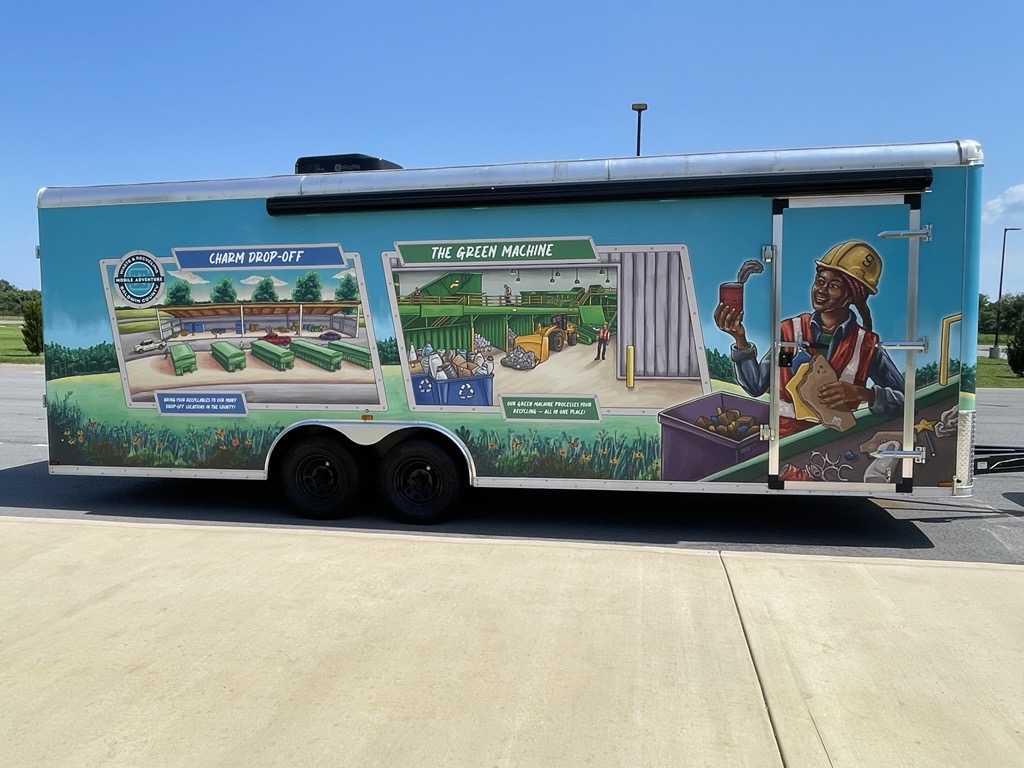
Introducing the Waste and Recycling Mobile Adventure

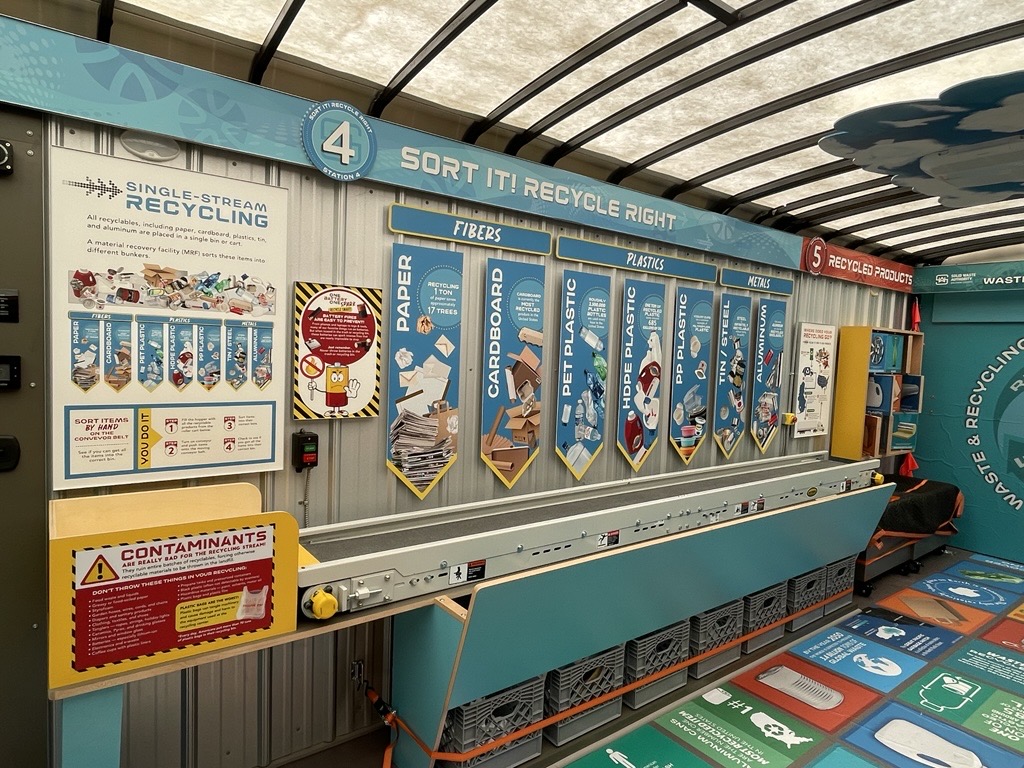
Our new Waste and Recycling Mobile Adventure is a traveling learning experience bringing hands‑on environmental education directly to communities across Baldwin County. The mobile adventure supports school programs, community events, and public outreach by taking the learning on the road and meeting people where they are.Inside the trailer, guests will find various interactive exhibits explaining how waste is managed, how recycling works, and how everyday actions contribute to a cleaner, healthier environment.

Want to see the trailer near you?